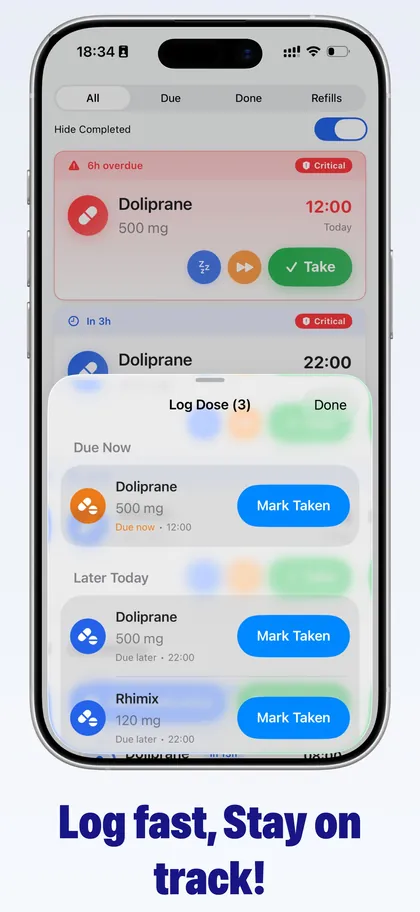
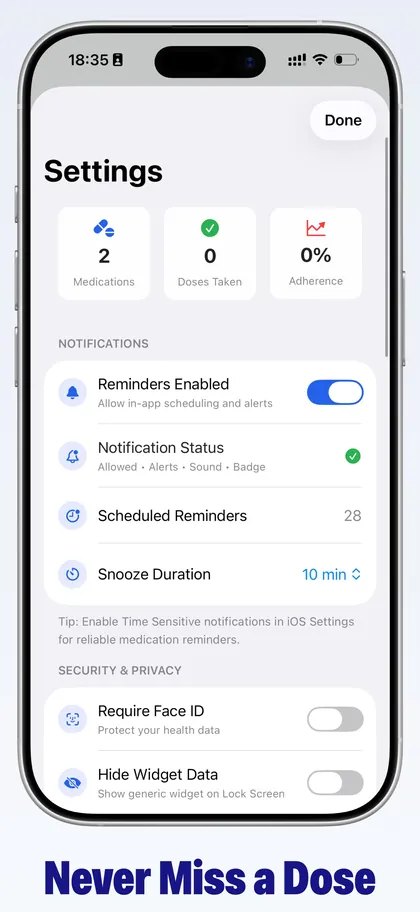
All three are in the free version. There is no feature here that a subscription unlocks.
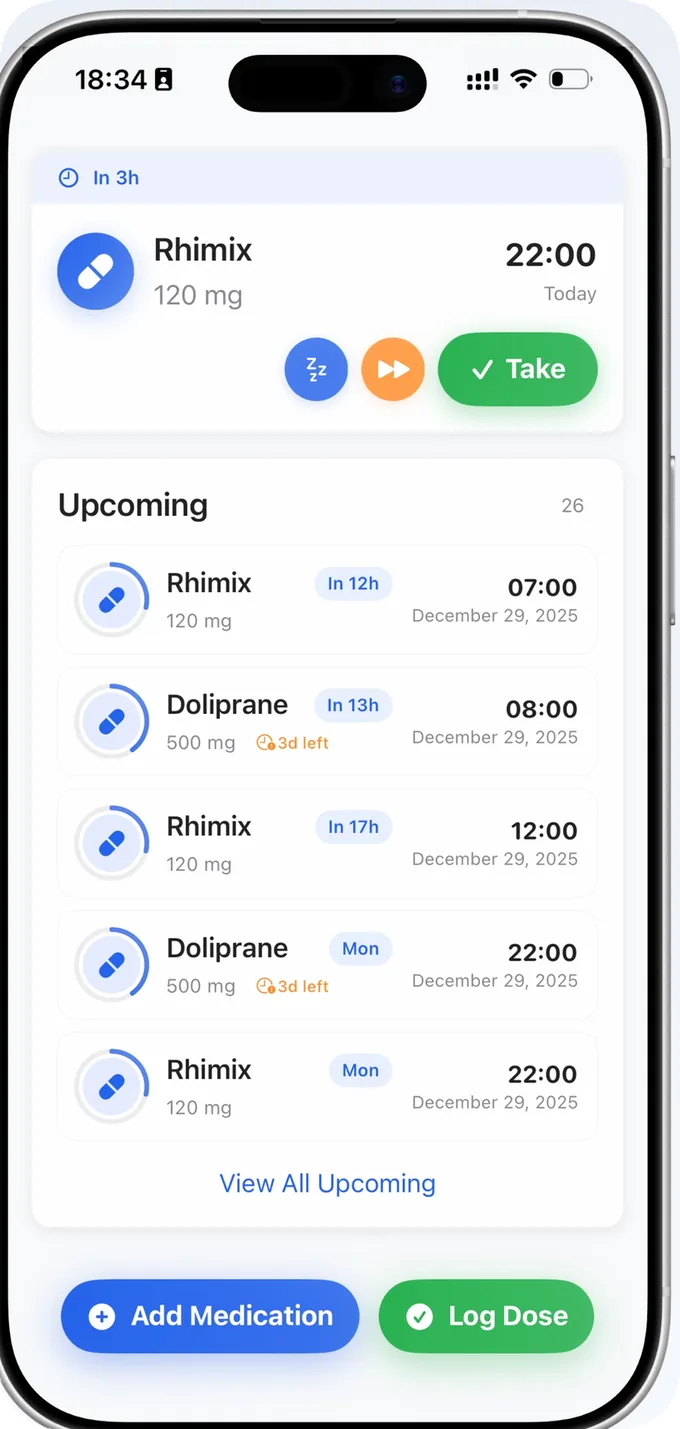
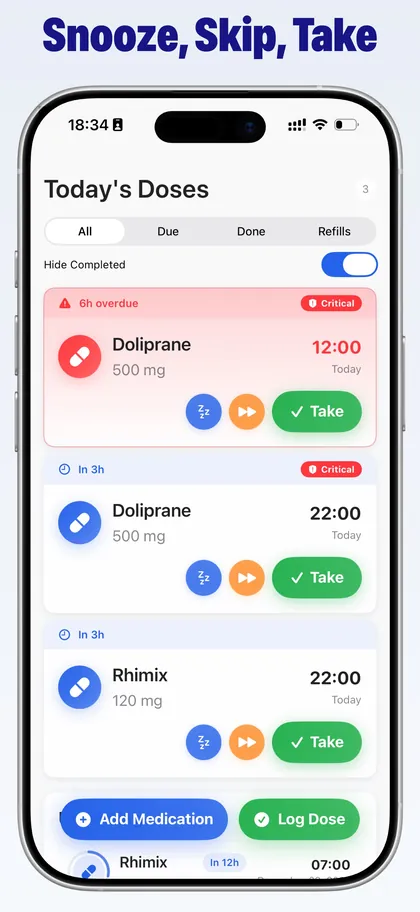
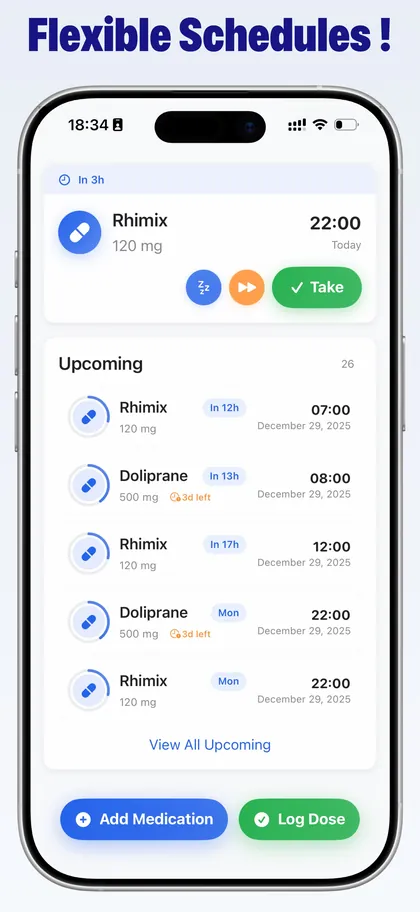
Scheduled on the device itself, so they fire with the app closed. Snooze, skip or mark a dose taken straight from the notification.
Every dose taken, skipped or missed, with the time it happened — the sort of thing a doctor actually asks for.
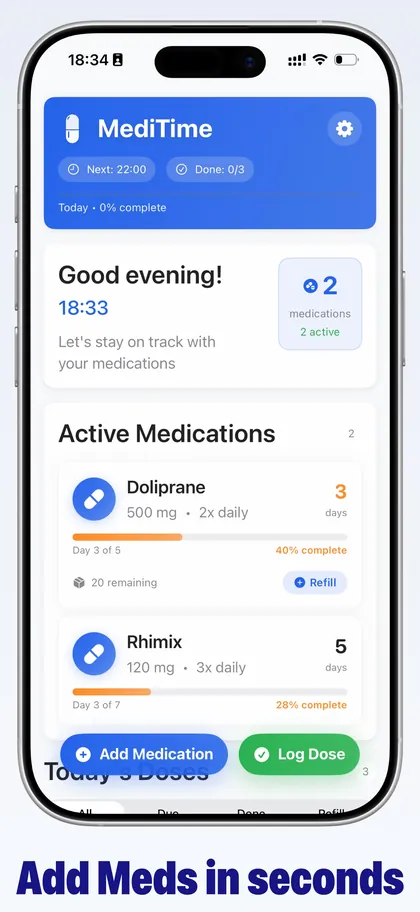
Record how many are in the pack and watch the count come down as you log each dose, so a refill is never a surprise.
One thing is behind the subscription: how many medicines you can track at once. Everything else is open to everybody.
Two at a time — not two ever. When a course of treatment finishes, its slot frees up again. A week of antibiotics doesn't cost you a permanent place.
The medicines you add, their doses, your schedule and your history are written to a database on your iPhone. There is no MediTime account, no login, and no server holding your list — which also means there is nothing for us to lose.
MediTime uses Firebase for crash reports and anonymous usage counts, RevenueCat to handle subscriptions, and Meta's SDK to tell whether an advert led to an install. They see things like which screen crashed, whether a subscription is active, and that an install happened — and only after you allow tracking when iOS asks.
Neither of them receives your medication data. Names, doses, schedules and history never leave the device.
MediTime is made by a small independent studio, not a health company with a sales team. That is the reason there is no account to create and nothing to sell on: the app has one job, and the parts that matter for safety — the reminders, the history, the refill counts — are free on purpose.
If something is broken or missing, write and say so.
— MyzaLife · support@myzalife.com